 Image 1 of 2
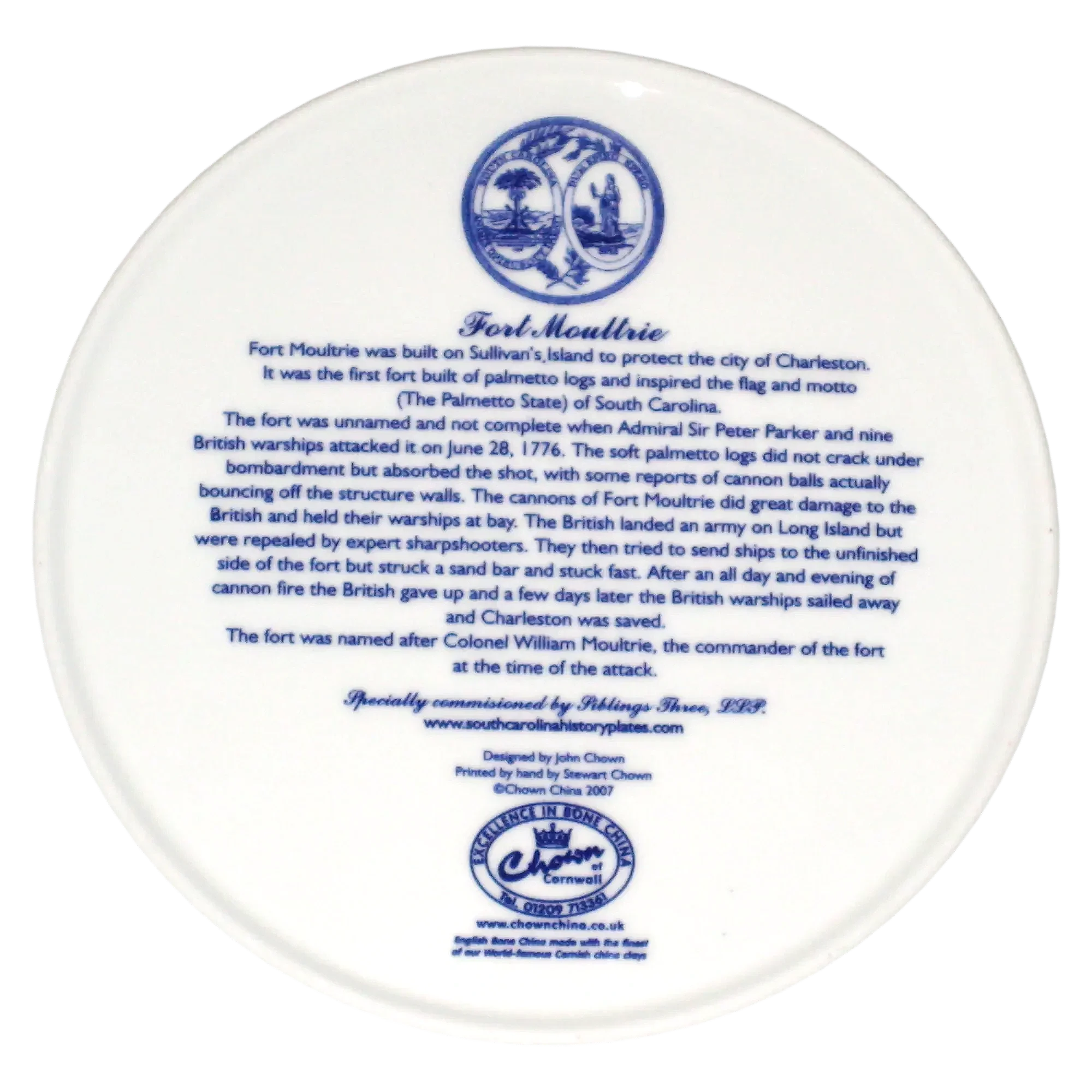 Image 2 of 2
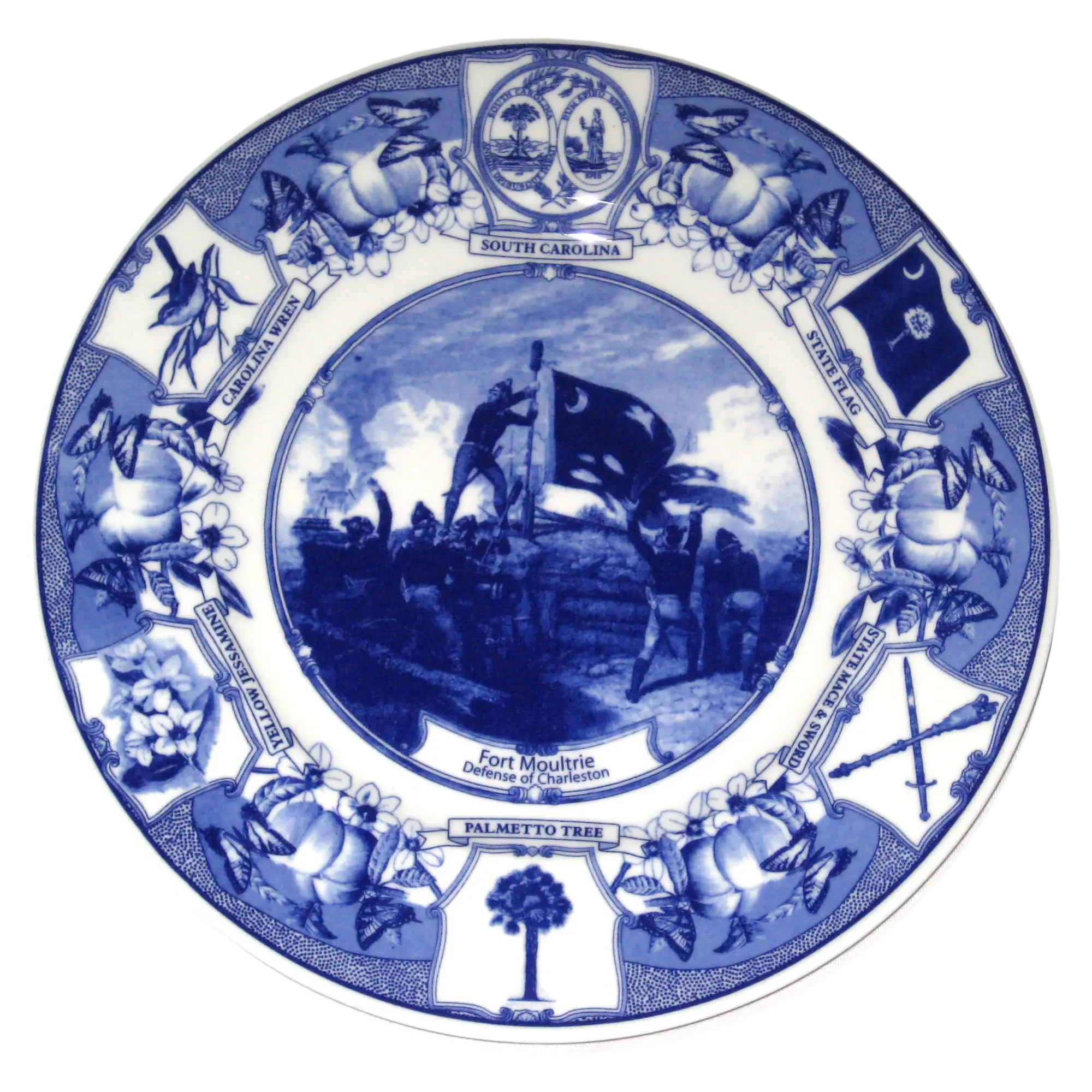
The palmetto-log fort that held off the British fleet in 1776 and gave South Carolina its flag and its nickname.
On the back of this plate: Fort Moultrie was built on Sullivan's Island to protect the city of Charleston. It was the first fort built of palmetto logs and inspired the flag and motto (The Palmetto State) of South Carolina.
The fort was unnamed and not complete when Admiral Sir Peter Parker and nine British warships attacked it on June 28, 1776. The soft palmetto logs did not crack under bombardment but absorbed the shot, with some reports of cannonballs actually bouncing off the walls. The cannons of Fort Moultrie did great damage to the British and held their warships at bay. The British landed an army on Long Island but were repelled by expert sharpshooters. They then tried to send ships to the unfinished side of the fort but struck a sandbar and stuck fast. After a full day and evening of cannon fire the British gave up, and a few days later the British warships sailed away and Charleston was saved.
The fort was named after Colonel William Moultrie, the commander of the fort at the time of the attack.
Details
Blue and white transferware in fine English bone china, made by Chown China of Cornwall, England
Design and artwork by John Chown, printed by hand
Dishwasher and microwave safe, made for everyday use
Border of South Carolina symbols: state seal, Carolina wren, state flag, yellow jessamine, palmetto tree, state mace and sword
From the original 2006 collection, in pristine condition
Free shipping