 Image 1 of 2
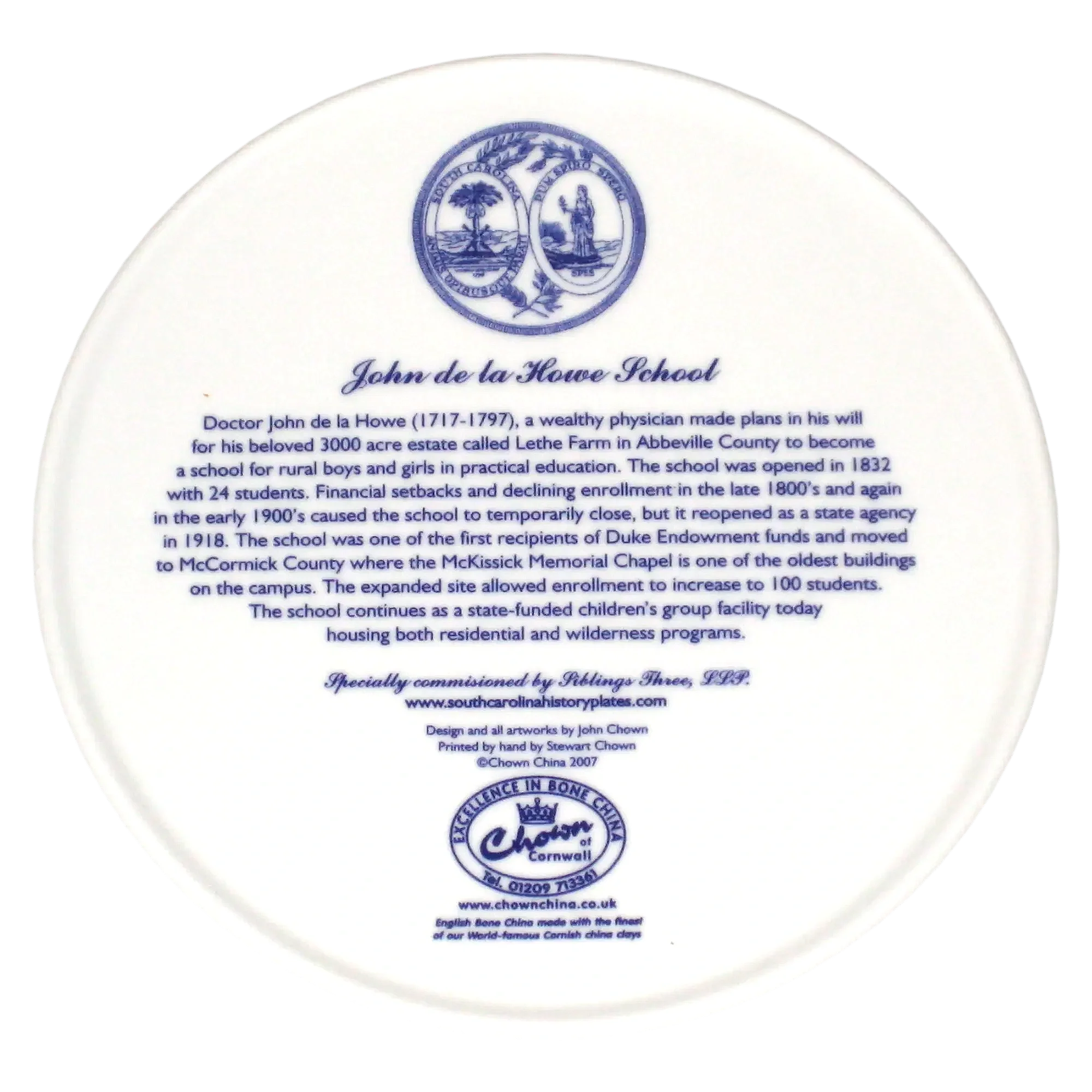 Image 2 of 2
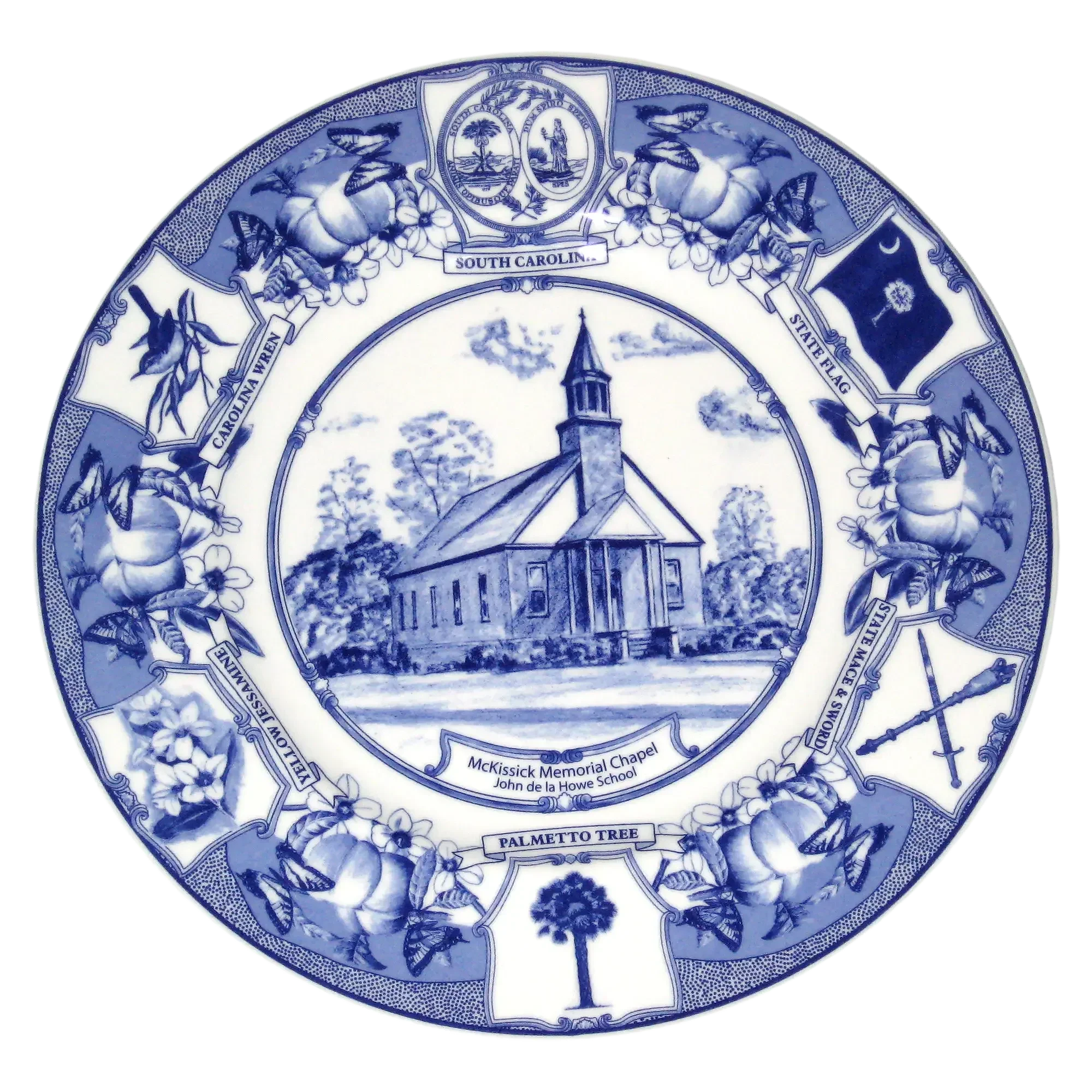
The McKissick Memorial Chapel, close to the McCormick home where the Talbert siblings grew up.
On the back of this plate: Doctor John de la Howe (1717–1797), a wealthy physician, made plans in his will for his beloved 3,000-acre estate called Lethe Farm in Abbeville County to become a school for rural boys and girls in practical education. The school opened in 1832 with 24 students. Financial setbacks and declining enrollment in the late 1800s and again in the early 1900s caused the school to temporarily close, but it reopened as a state agency in 1918. The school was one of the first recipients of Duke Endowment funds and moved to McCormick County, where the McKissick Memorial Chapel is one of the oldest buildings on the campus. The expanded site allowed enrollment to increase to 100 students. The school continues as a state-funded children's group facility today, housing both residential and wilderness programs.
Details
Blue and white transferware in fine English bone china, made by Chown China of Cornwall, England
Design and artwork by John Chown, printed by hand
Dishwasher and microwave safe, made for everyday use
Border of South Carolina symbols: state seal, Carolina wren, state flag, yellow jessamine, palmetto tree, state mace and sword
From the original 2006 collection, in pristine condition
Free shipping